Build journal3 min read
Four languages. One feed. The next problem.
By Cédric · Published · This entry recounts 1 November 2026.
Yesterday's question was whether I could record in French and share the message in other languages. Today's question starts after the export: where should all these videos go?
The same video, four times
Once the versions were ready, I ran into a very ordinary problem. If I put the same video in four languages on one account or in my stories, someone following me sees repeated versions of a message they may only understand once.
Some people in my audience speak French; others speak English. If I want them to follow the next episode, I need a way for each person to find the version they can understand.
Making more versions gives us more material. It doesn't automatically give us four audiences. The way we share the videos needs as much thought as the way we produce them.
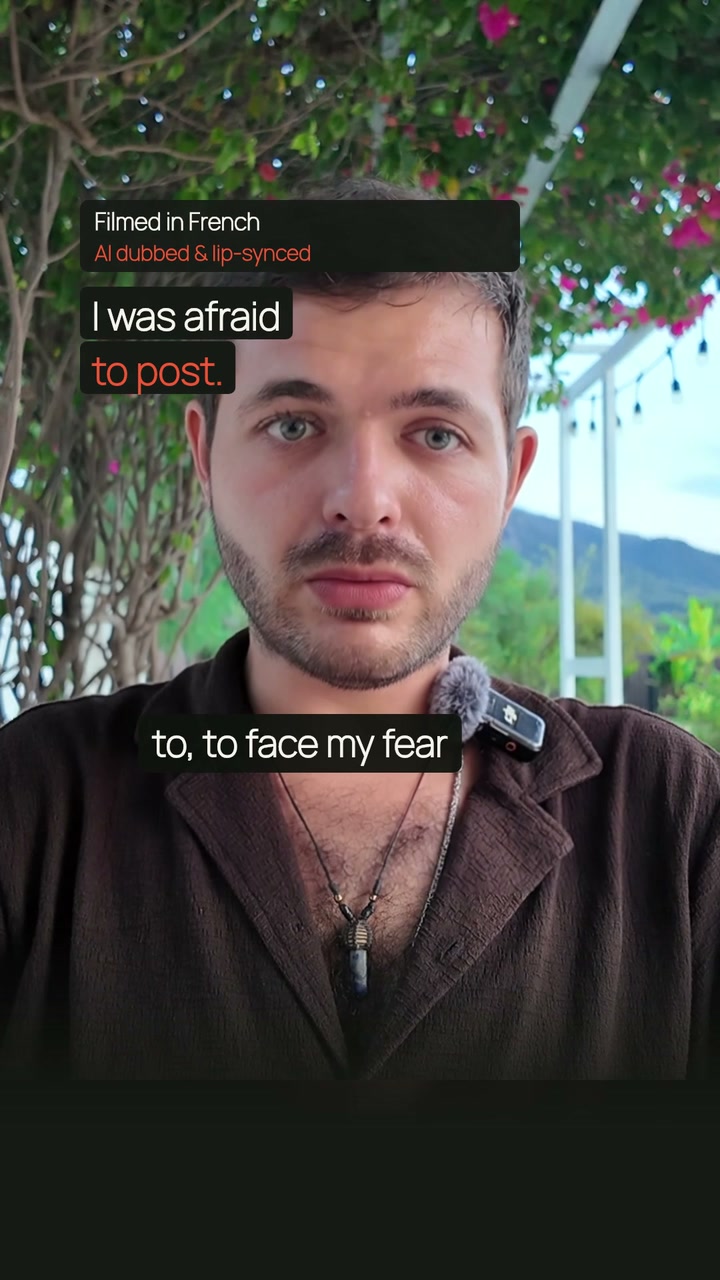
Recorded in French. AI-dubbed and lip-synced into the selected language.
Same translated audio in both versions.
Download subtitlesOne account per language is the idea to test
In today's recording, I describe the next direction: an account per language. The distinction matters to me. I'm thinking about the language someone can follow, rather than making a new account for every country.
The aim is to make the experience easier to understand: if you choose the English account, you know what language the next episode will use. The French version can keep its own place, without every follower having to move through all the other versions.
Separate accounts also mean more things to manage. That is what I want to test next: a clearer experience for the viewer, with a process I can actually keep up with.
Today's video is the demonstration
I recorded this update in French. The finished episode runs for 47 seconds and is available in English, French, Spanish and German. The translated editions have localized subtitles and graphics, an AI-dubbed voice and adapted lip movements.
They also say that the video was recorded in French and translated. I want that to be visible: the video is both an update about AltaCross and a way to see the work for yourself. You can choose a language and compare it with the reference that keeps the original French mouth movements over the same translated audio.
Now, join the steps together
The workflow I want to investigate is straightforward to describe: publish in French, retrieve the video, prepare the other language versions, adapt the lips and send each version to the right account. Doing that reliably without turning every post into a manual project is the next challenge.
We have produced the multilingual videos. We are still exploring the automatic retrieval and publishing workflow. I'll keep showing the progress as we test it with my cofounder, including the parts that need another pass. For now, this chapter ends with a useful next question: can we make the whole process manageable enough to keep creating?