The origin3 min read
It started with a yoga course my family couldn't follow.
By Cédric · Published
A course I wanted to share
I was helping my yoga school in Chiang Mai with its website and online training. I knew the content and wanted my mother and sister to take the course too. There was a fairly obvious obstacle: the course was in English, and they did not speak English.
The knowledge already existed. Someone had organised it, explained it and recorded it. The school already had people learning from it. But when I thought about sharing it with two people close to me, the language made that existing work inaccessible.
The question that stayed with me
Talking about it with a friend, I started looking at the problem differently. What if the school could offer the same teaching in French? What would it take to translate the lessons, generate a spoken version, add subtitles and keep the timing close enough for someone to follow comfortably?
It quickly became a broader question. Plenty of people explain things well in one language: teachers, course creators, people running a Skool community, people sharing what they know in a short video. Could they keep the performance they had already recorded and adapt it for someone else?
Then I became the first test subject
The easiest person to put in front of the camera was me. It also made the experiment personal. Speaking on camera already takes some courage. Thinking about doing it in English gave me another reason to put it off. If I could speak naturally in French and make a convincing English version, I could test the same obstacle from the creator's side.
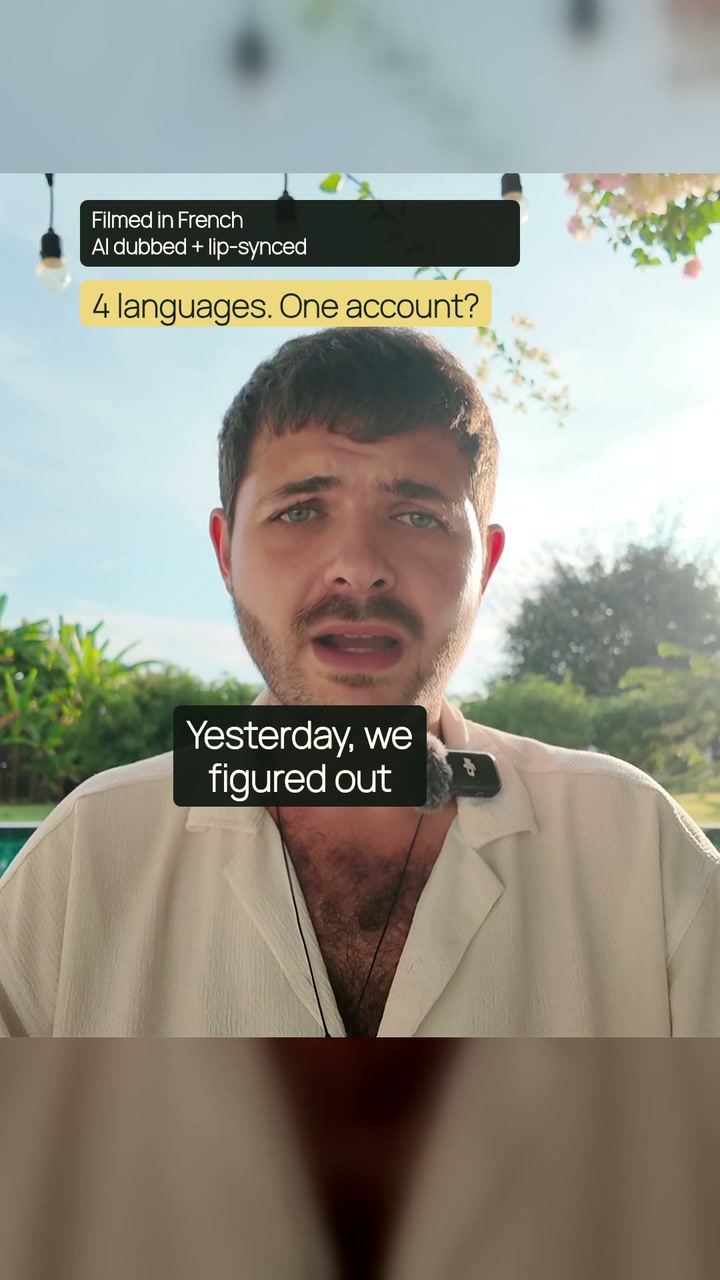
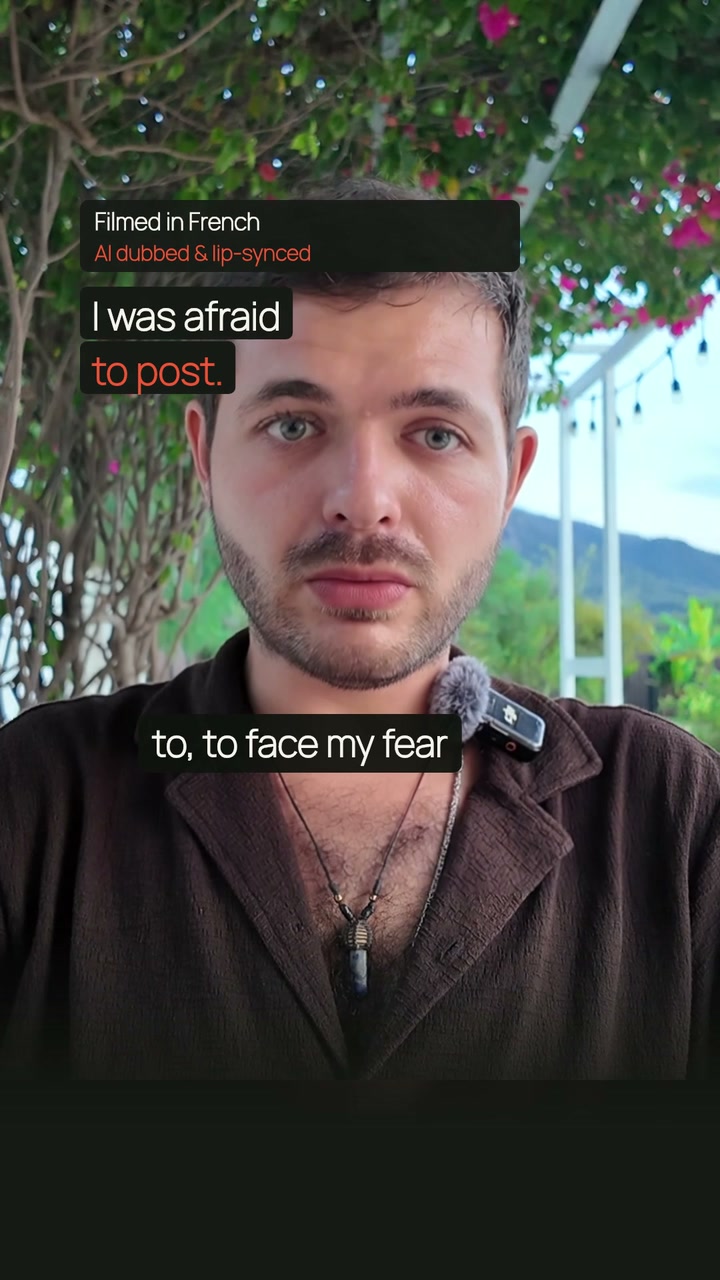
So we started with my own footage. A short French pitch became several language editions. We listened to the voices, looked at the subtitles and tried lip sync. Then we built a longer story with context, a real translated example and an ending that gave viewers a reason to follow the next step.
The details became the work
It is easy to describe the idea as “translate a video”. Watching the result makes the job more specific. Does the sentence sound like something a person would actually say? Does the voice fit the pace? Can you read the subtitles around the buttons on a social app? What happens to the face when the lips are adapted?
Those are the things we are working through with AltaCross. We show the original recording and the translated versions because I want people to judge the result directly. The comparisons also help us see what needs another pass.
An idea that keeps producing another question
Making the language editions brought up the next issue: how should we share them without mixing several languages in the same feed? We are exploring one account per language and a workflow that could make the process easier to manage. There is still work to do, and it belongs in the story too.
AltaCross started because I wanted two people I care about to understand something worth sharing. I am documenting the progress because the most useful explanation of the idea is to show it happening: a real recording, another language, then the next problem we need to solve.