Build journal3 min read
The tech works. Now we need customers.
By Cédric · Published · This entry recounts 4 November 2026.
We have videos we can translate and lip-sync. My cofounder has joined me in Thailand. Today's question is how to turn those technical tests into conversations that could help us find our first paying customers.
My cofounder has arrived
My cofounder has joined me in Thailand. I'll introduce him in a video in the next few days. For this update, I wanted to share the next thing we're working on together: finding our first paying customers.
Over the last few days, we have tested video translation and lip sync. We now have examples to show people. Today's plan is to put those examples in front of creators whose content could be useful in another language.
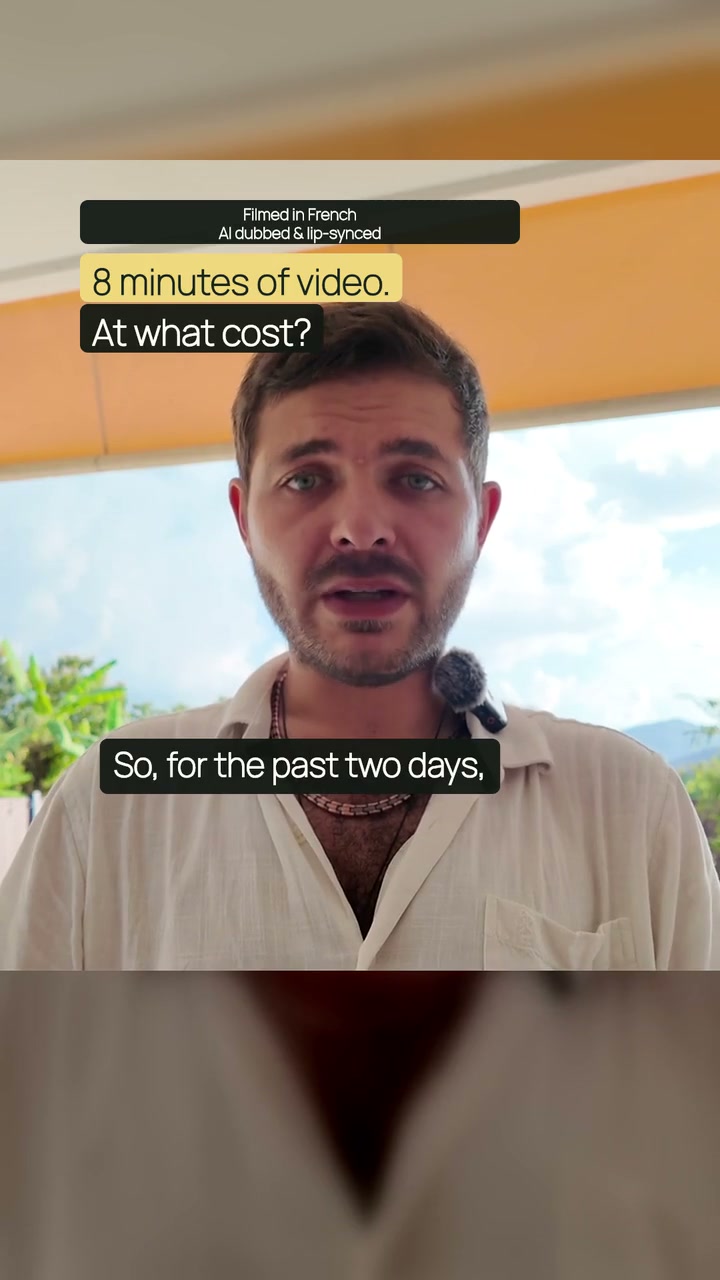
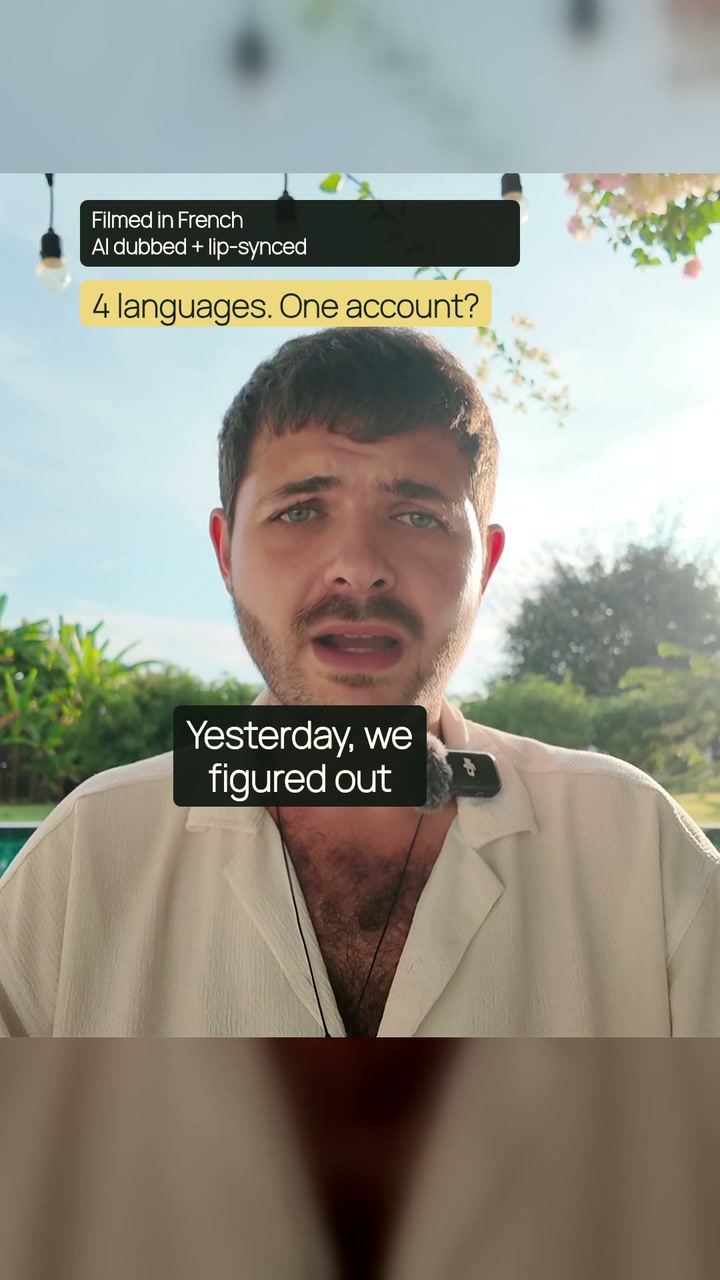
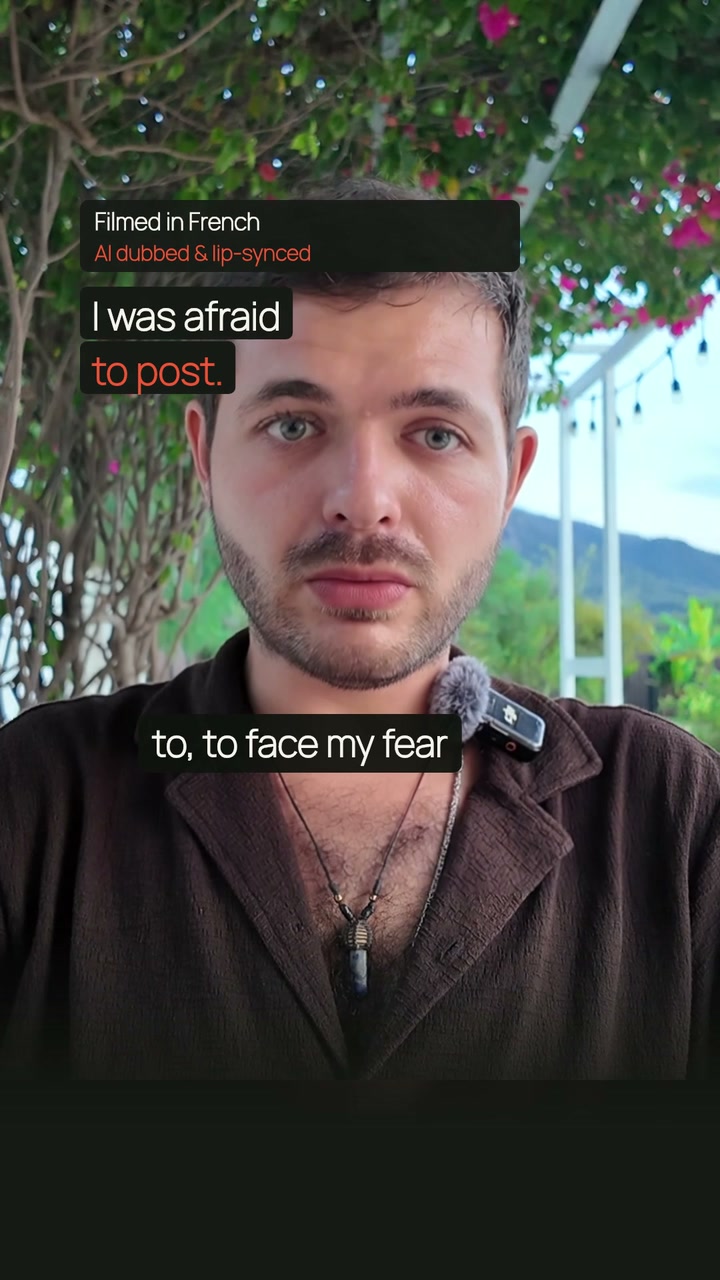
Recorded in French; AI-dubbed and lip-synced into English, with localized subtitles and graphics.
Same translated audio in both versions.
The English and Spanish videos disclose the original French recording at the beginning. The player pauses at the same moment when switching between the before and lip-synced editions.
Download subtitlesStart with people who already teach
We're looking for people who already have an online course that works in its current language. The idea is to offer them a way to translate that teaching for another audience.
In the video, I mention Instagram as the main place to begin, along with TikTok. Skool is another place I want to look for course creators, then find the social accounts where they share their content.
Their own video is the demonstration
The approach is simple: find a creator's course and social accounts, choose an existing Reel or a recent post, and prepare a translated version. Then send a direct message with something concrete to discuss.
The question I want to test is whether seeing their own content in another language makes the idea easier to evaluate. A creator can hear the voice, look at the subtitles and lip sync, and decide whether this could be useful for their course.
About 50 contacts. About 10 demos.
For this first test, the plan is to contact around 50 people and prepare translated, lip-synced examples for around 10. Producing a demo has a cost, so I want to keep the experiment small enough to carry out and learn from.
Those numbers describe the plan announced in this update. I haven't reported outreach results, bookings or new customers here. The next update will be a chance to share what actually happens.
This episode is a demonstration too
I recorded today's update in French. You can watch the original or choose English or Spanish, with AI dubbing, localized subtitles and graphics, and lip sync. The translated editions disclose that the recording was made in French.
The player also lets you compare each translated edition with the version before lip sync: the same translated audio, with my original French mouth movements. Watch, listen and compare. That's the kind of concrete example we want to put in front of course creators.